Swimming with the toddler
When your child is one year old, he has passed the baby swimming time and you can go to the swimming pool together to learn new skills. During the first visits to the swimming pool, the child encounters a lot of new things: the water in the pool is exciting and also the new environment, echoing sounds and strange people can surprise. In this guide, you will find tips for the first swimming sessions, starting a swimming school, and choosing a children's swimsuit and children's swimming goggles and equipment.


Children's hand floats or a floating swimsuit?

A child's first experiences in water are often crucial in shaping their relationship with swimming. The right kind of buoyant swimming aid increases their sense of safety and helps the child get acquainted with the water at their own pace.
Our selection of buoyant swimming aids meets European safety standards. However, it is important to remember that no buoyant product replaces continuous adult supervision. A child must be supervised without interruption both at the swimming pool and at the beach.
Children's Armbands
Inflatable armbands are a familiar way for many to start water play. They are lightweight, take up little space, and are easy to carry to the beach or swimming pool. Our selection includes armbands for children weighing 8–30 kg.
Armbands keep the child in an upright position in the water, making them particularly suitable for play and practicing movement in the water. When the goal is to get used to a natural swimming posture and develop water skills, many choose a buoyant swimming vest instead.
A floating swim vest supports a natural swimming posture
A floating swim vest is an excellent choice for a child learning to move in the water and seeking confidence in swimming. Unlike arm floats, a well-fitting swim vest frees the arms to move naturally and helps the child practice swimming strokes in a more balanced position.
For a swim vest, we recommend the Aqua Float Vest floating swim vest. Its soft and comfortable construction makes the vest pleasant to wear, and the adjustable straps and double fastening system help keep the vest securely in place even during water play. A good fit increases comfort and gives the child confidence in the water.
A floating swim vest is perfectly suited for both swimming pools and beaches, and for many children, it is a natural aid on the journey towards independent swimming. Remember, however, that a swim vest is a swimming aid – not a life vest – so the child must be continuously supervised even when using the vest.
Children's swimming goggles

Are swimming goggles necessary for a child? This depends largely on the child's age, eye sensitivity, and the activities being practiced. Goggles are not essential or even necessary for baby swimming, but later in swimming lessons, they become one of the most popular pieces of equipment. Goggles generally encourage children to put their faces in the water more easily, as the water won't cause eye irritation. Also, visibility remains clearer than when diving without goggles.
How to choose the right swimming goggles
Testing the goggles
- First, read the section on testing swimming goggles in our adult goggle guide. This will help you determine if the goggles you are trying are sufficiently tight and comfortable for the child.
- Ask the child how the goggles feel. Children are normally very sensitive to pressure from the goggles, and if the child feels the goggles are pressing, they might end up not using them.
Choosing the goggle model
Goggles are available for children with both a smaller and a larger fit.
- Larger fit - Pressure is applied further away from the sensitive skin around the eyes, making the goggles comfortable to wear. You'll find the largest fit in mask-style goggles, which even the most sensitive children usually accept as their swimming goggles. However, due to the larger fit, these goggles are not ideal for jump training, as they can more easily come off. Best for first swimming lessons, recreational swimming, and beaches.
- Smaller fit - A smaller fit brings a bit more pressure, but at the same time, the goggles stay on better even when jumping. These goggles are excellent for all types of swimming and for younger competitive swimmers.
Children's goggles very often also feature handy and quick quick-release fasteners, i.e., button-adjustable straps. This also makes it easier for the child to adjust the goggles to the right tightness themselves.
Where can I find a swimming school?

Swimming lessons are organised in swimming pools and, in the summer, also at swimming beaches. They are organised by, among others, municipal sports departments, swimming clubs and other associations, and private companies.
On the Suh.fi website, you will also find tips on how you can already get used to the water and practice swimming skills yourself.
When choosing a swimming school, it is good to consider the following:
- Familiarisation with the swimming pool: Before the swimming lessons begin, it is advisable to visit the swimming pool beforehand. This should be done calmly a few times. The depth of the swimming pool, the sounds of the water, water splashes, and other people can be intimidating during the first few visits. When the place is already familiar, it does not in itself make the swimmer nervous, and they can focus on the instruction in the swimming school once the swimming pool is a familiar place.
- Accurate assessment of the child's skills: When choosing the right level of swimming school group for a child, it is better to underestimate the child's skills to find an appropriate teaching group. Swimming schools have requirements for groups, which ensure that the starting level of the entire group is as close to each other as possible. This facilitates the implementation of the group's curriculum and thus the development of each student with the group.
Tips for your swimming hall visit

Tips from the Finnish Life Saving Federation for the swimming pool
- A child gets used to water best when they are constantly moving, playing, and being active in the water. All kinds of movement in the water also trains their balance. To help them get accustomed to the water, you can also use various swimming toys, which help the child get used to the water almost without noticing.
- If you use swimming aids, practice without them occasionally. Remember that children must be supervised continuously, even if they can already move independently with armbands or a buoyancy swimsuit.
- Getting used to the movements and splashes of water, as well as moving independently in the water, are the first steps towards submerging. You can also pour water over the child by mutual agreement, or encourage the child to put their face in the water themselves. At this stage, it's good to practice exhaling into the water by blowing bubbles. Do not teach them to hold their nose. It's better to blow nose bubbles. Blowing can be practiced through play, and the bubbles coming from a parent's mouth are often amusing to children.
- While doing dipping exercises in the water, you can learn to dive and retrieve objects from the bottom. Initially, it's a good idea to practice this in shallow water, and the first successes can be achieved, for example, by the adult placing the object in the child's hand when the child blows bubbles and reaches for the object. Gradually, the child will dare to go deeper.
- Always remember to proceed according to the child's terms. Children are different, and for some, getting used to water and learning different skills takes time.
As skills improve, you can find more tips for swimming practice with children on the "Pulahda uimaan" website.
Choosing a children's swimsuit
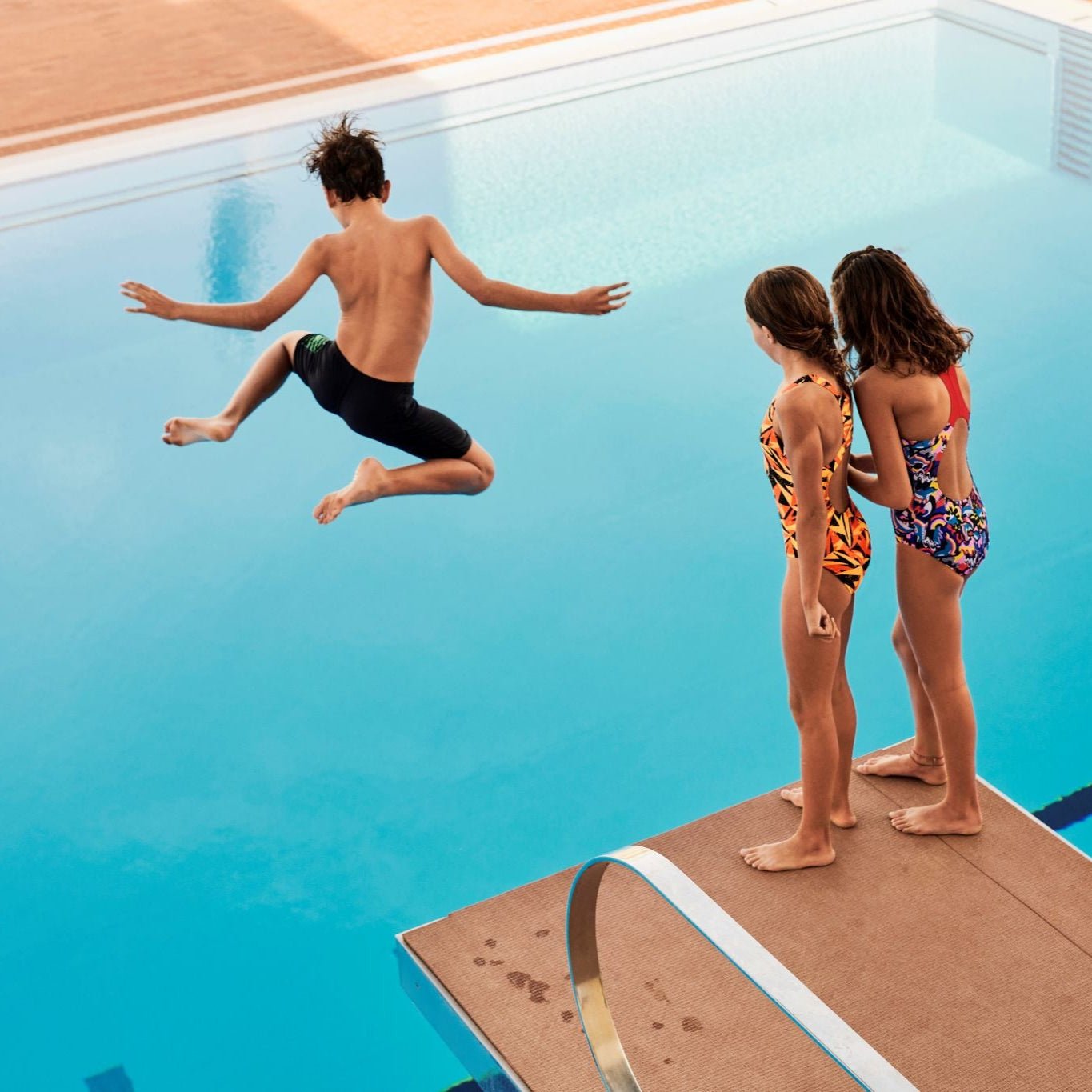
Our selection includes swimwear for babies (0-2 years old), toddlers (2-4 years old), and children and youth (6-16 years old). Children's swimwear comes in many fun patterns and colors that children particularly enjoy. If you are looking for swimwear for the beach or a holiday trip, we especially recommend bright colors such as pink and orange. In dark lake water, neon colors like neon green and neon yellow stand out best.
Choosing the right size for children's swimwear
We list sizes in European cm sizes, in addition to the manufacturer's stated sizes. If you are unsure between two sizes, for Arena children's swimwear we recommend choosing the larger size, while Speedo children's swimwear is true to size. Read more about choosing children's swimwear here.